
From data to decisions: getting more value from sustainability measurement
From February issue, NZ Manufacturer magazine
The way manufacturers measure sustainability is changing rapidly. New tools, improved data and AI-enabled platforms mean businesses can now measure far more than they could a few years ago. Carbon, circularity, risk and supply chains — the list keeps growing.
For manufacturers, this often shows up as long lists of metrics across plants, products and suppliers. Energy and fuel use on the factory floor, raw materials, packaging, transport and supplier emissions are all in scope. Without clear priorities, teams can spend months collecting data without clarity on what to act on first.
Measuring everything is rarely practical, and it is not the goal. What matters is measuring the right things, at the right level of detail, to support decisions that reduce risk and create value.
As Jeff Vickers, Technical Director at sustainability firm thinkstep-anz, puts it plainly: “You can’t manage what you don’t measure.” He also cautions that “we need to focus our efforts on measuring what matters most so that we don’t get lost in the detail.”
Why focused measurement leads to better outcomes
More data does not automatically mean better decisions. The real value comes from measuring what matters and using it well.
A focused approach to measurement helps organisations:
- Keep priorities clear: A small set of meaningful metrics makes it easier to see what matters most and act with confidence.
- Put effort where it counts: Time and budget are spent on data that actually changes decisions, rather than information that sits unused.
- Protect credibility: Reported numbers are understood, can be explained and are clearly linked to actions being taken.
- Meet expectations: Measurement focuses on the issues regulators and investors care about most, reducing the risk of blind spots.
This approach avoids the risks of over-measurement while strengthening insight, trust, and performance.
Many businesses now have access to detailed sustainability data across sites, products and suppliers. The next step is to strengthen insight in a small number of high-impact areas, such as key materials like steel, aluminium, cement or chemicals. Focusing measurement here can provide clearer visibility of cost exposure, supply chain risk and decarbonisation options.
With the growing availability of tools and calculators, it is easier than ever to generate results. The greatest value comes when these tools are guided by a clear purpose, so data collection is targeted, decision-ready and aligned with what the business is trying to achieve.
How to choose what to measure
Materiality is the anchor for good measurement. Jeff emphasises that measurement only creates value when it focuses on what genuinely matters, not what is easiest to calculate. That focus is reinforced by Martin Fryer, thinkstep-anz’s Head of Strategy and Disclosures, who is seeing sustainability increasingly assessed through a risk and performance lens.
In manufacturing, material issues often relate to energy-intensive processes, reliance on emissions-intensive materials, exposure to volatile input costs or dependence on a small number of critical suppliers. Focusing measurement on these areas helps organisations manage risk and direct investment where it will have the greatest impact.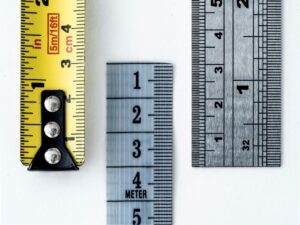
There is also a clear shift in stakeholder expectations. Investors, customers and regulators are looking for meaningful action, supported by transparent reporting of performance. Materiality therefore becomes more than a compliance exercise – it is a way to prioritise limited resources and link sustainability to business outcomes.
Photo by William Warby on Unsplash
A practical way to decide what to measure is to test each potential metric against three questions:
- Does this matter to the business and its stakeholders?
Focus on issues that create material risk or opportunity, including regulatory exposure, cost impacts, supply chain disruption, access to capital and reputational risk. For many manufacturers, scope 3 emissions linked to purchased materials are far more material than office waste or business travel.
- Will this inform a decision or action?
If the data will not change what happens next — investment decisions, procurement choices, targets or controls — it is probably not a priority. Measurement should support decisions such as supplier engagement, material substitution, process upgrades or capital investment in energy efficiency.
- Is now the right time to measure this?
Some topics require detailed data later. Early on, high-level estimates may be enough to guide action. For example, early screening of key suppliers or products is often more useful than detailed data collection across the entire value chain.
For many manufacturers, this means prioritising key scope 3 categories rather than the full value chain, focusing on priority products or sites, and targeting suppliers or regions where risk and scrutiny are highest.
Where to start if you are early on
Getting started does not require perfect data. It requires a clear starting point.
For organisations early in their measurement journey, a practical starting sequence is:
- Clarify the purpose: Be explicit about why you are measuring. Is it to meet regulatory requirements, inform strategy, respond to customers or manage risk?
- Set a baseline using available data: Use reasonable estimates and existing information. Early baselines are about direction, not precision.
- Focus on the biggest drivers: Identify the activities, suppliers or assets that account for the majority of impact or risk.
- Link measurement to actions: Define what decisions the data will support, such as target setting, supplier engagement or capital allocation.
Progress rarely starts with perfect data. Manufacturers that act early can build momentum, make clearer investment decisions, strengthen supply chains and deliver credible reporting that meets growing expectations.
Not sure where to start? We can help
thinkstep-anz works with manufacturers to cut through complexity and focus measurement on what is most material. This includes helping organisations clarify purpose, prioritise impacts and risks, build credible baselines and link data to decisions, targets and disclosures.
Whether the need is regulatory readiness, supply chain insight or better decision-making, the focus is always on measurement that supports action and stands up to scrutiny.


