
Ecostore: Building world-class sustainable manufacturing from Auckland
Offering environmentally responsible and eco-friendly alternatives to conventional products has been the goal of Ecostore since its foundation in 1993.
That purpose is backed by a sophisticated manufacturing operation in Auckland, where ecostore develops, manufactures and packs its home cleaning, personal care and baby products at its own Toitū Net Carbon Zero-certified factory in Pakuranga. A B Corp-certified business with products sold across New Zealand and into multiple export markets, Ecostore’s growth story is one of continuous improvement.
The EMA’s Nicholas Russell spoke to Ecostore Chief Operating Officer Tony Acland about how the company has used smart design, practical technology and better factory flows to lift performance, capability and scale.
How does manufacturing support ecostore’s growth and export strategy?
Tony Acland: Manufacturing is at the heart of Ecostore’s business model. By owning our production and packing, the company can move faster on product innovation, control quality, and continuously improve how products are made.
As demand has grown over the past decade, the focus has been on redesigning layouts, upgrading equipment and improving material flows so the factory can scale efficiently while maintaining high environmental and quality standards.
That mindset has driven major changes in how the site operates, from relocating and re-positioning key production equipment into brighter, cleaner, better-ventilated areas, through to re-engineering how raw materials and packaging move through the facility.
The result is a manufacturing environment that better supports higher volumes, smoother workflows and more consistent output.
What practical investments have made the biggest difference on the factory floor?
Tony Acland: One standout example has been investing in equipment that improves both efficiency and accessibility.
The installation of vacuum bag lifters means powder batches can now be manufactured without manual handling of large volumes, making production faster, safer and more inclusive for a wider range of workers.
Space and logistics were another key focus. As volumes increased, so did the flow of packaging and raw materials.
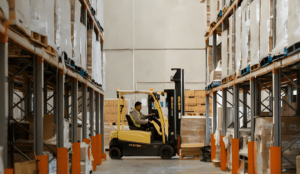 By leasing the neighbouring site and moving bulk storage into a dedicated warehouse space, we streamlined how inputs feed into production.
This reduced congestion, improved factory flows and helped create a cleaner, more efficient manufacturing environment that supports higher throughput.
Just as importantly, traffic management, floor layouts and barriers were redesigned to align with production flows, showing how smart factory design can lift both productivity and operational performance at the same time.
How is Ecostore using technology to modernise its manufacturing systems?
Tony Acland: A major recent step forward has been the rollout of AI-enabled monitoring using the existing CCTV network.
The system uses machine learning to distinguish between people and forklifts and detects when they come within close proximity on the factory floor.
When an event is detected, it’s automatically logged, with a short video clip sent to a central dashboard for review. This gives managers clear, real-time data on what’s happening across the operation and turns everyday factory activity into a powerful continuous improvement tool.
Over time, the data allows the team to track trends, set KPIs and see event rates reduce as layouts, processes and behaviours improve.
What was once a reactive system has become a proactive, evidence-based way to refine factory design, improve training and strengthen operational discipline.
How does data and systems thinking support continuous improvement?
Tony Acland: Ecostore has built a strong culture of measurement and visibility into its operations. Training systems, dashboards and reporting tools are integrated into the wider ERP environment, giving leadership clear oversight of what’s happening on the floor week by week.
This data-led approach supports faster decision-making, more targeted improvements and better alignment between factory design, production flows and business goals.
Q: Ecostore has been an EMA member for many years. How has the association supported your manufacturing journey?
Tony Acland: We’ve made good use of the association’s learning, advisory services, courses and events to build capability across the business.
On the operational side, we’ve had team members go through the Payroll Essentials course and we’ve also engaged with sector-focused events like the ASB Manufacturers Workshop: The Impact of Industry 4.0 on Your Business that explore practical automation and digitisation solutions.
That kind of applied learning aligns closely with our own focus on smarter systems, data and technology on the factory floor.
Looking ahead, we’re investing in our next generation of leaders by sending a team member to the EMA’s Emerging Team Leader two-day course in March.
For us, that’s about building leadership capability alongside technical and operational excellence.


