

Data, Decisions, and the Drive for Productivity, A Digital Path to World Class Performance
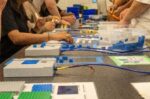
Article 3: V2 –By Neil Robinson, a Senior Business Consultant with Argon & Co (Auckland) specialising in productivity improvement, Lean systems and capability building. If you’re reading this third article in the series, you already know that New Zealand manufacturers face a difficult reality: our productivity lags many of the countries we compete with. Labour is tight, costs continue to rise, and customers expect more value delivered faster and with fewer errors. This situation demands stronger, more reliable processes. Many operational leaders feel this pressure daily. The question is no longer “Should we improve?” It’s “How can we improve quickly, sustainably, and with the people we already have?” The good news is that there is a practical way forward. More leaders are turning to hands-on capability building, such as the 4×4 Simulation, to lift performance from the inside out. In Article 1, we explored how teams experience the shift from chaos to flow. In Article 2, we looked at how the deeper two-day version helps participants understand why improvements work and how to apply them in their own workplace. Now we arrive at the next evolution: the Digital 4×4 Simulation, where participants combine practical learning with real-time operational data to accelerate improvement. 1.1 Why New Zealand Needs This Now New Zealand’s productivity challenge is well documented. We work hard, often very hard, but too often our processes let us down. Unreliable flow, inconsistent standards, firefighting, quality escapes, poor teamwork, unbalanced workloads, and slow changeovers all eat into profit. Software alone is not the answer. Automation alone cannot fix this. Even continuous improvement programmes struggle if the foundation of process stability is not in place. This is why the Digital 4×4 matters. It helps teams see, understand, and improve the behaviours and systems that control productivity, then strengthens that learning with […]