
Moving a food manufacturing business: Lessons from Old Country Food
From June issue NZ Manufacturer magazine
Family-owned Auckland manufacturer Old Country Food is one of New Zealand’s largest Asian food producers, making more than two million steamed buns and about 15 million dumplings annually for supermarkets, hospitality businesses and specialty retailers across the country.
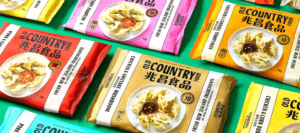
Founded more than 35 years ago by immigrants from Hong Kong, the business has evolved through several groups of Asian ownership before CEO Dr Amy Sevao’s family bought into the company in 2015.
Its food philosophy reflects that journey. The business originally specialised in Cantonese-style dim sums before northern Chinese expertise refined its dough-making techniques.
Taiwanese influences later shaped the product range, while a distinctly Kiwi approach to ingredients and flavour helped transform the business into a modern Asian fusion manufacturer.
“When I took over, I brought in Kiwi executive chef Cameron Knox to rethink the recipes,” says Amy. “The goal was to create a distinctly New Zealand flavour profile: cleaner, simpler and more ingredient led. That really became part of our identity.”
That innovation-led approach has helped Old Country Food grow despite difficult trading conditions across the food manufacturing sector recently.
The company was behind the launch of the world’s first hāngī steamed buns, a Māori and Asian fusion product that sold out nationwide and has just launched a new dumpling range specifically designed for air fryers.
In 2025, Old Country Food moved from its premises from Henderson to a customised 800sqm North Shore facility. Amy says the move to a larger, more efficient factory has been central to the company’s next stage of growth, allowing it to streamline operations, reduce costs and double production capacity.
Old Country Food has been an EMA Member for nearly two years and the team took a tour of the facility recently.
The EMA’s Nicholas Russell sat down with Amy to learn more about the move and to gather advice for manufacturers thinking of relocating.
Q: Why did you decide to move the manufacturing site?
Amy Sevao: The Henderson site just wasn’t fit for purpose anymore. We were operating across two separate warehouse units with another business in between.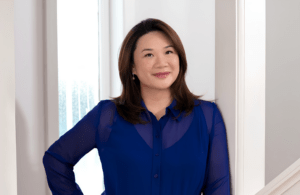
It created inefficiencies because you couldn’t see what was happening across the whole operation, and we were duplicating systems just to meet health and safety requirements.
At a certain point, you have to ask whether you keep patching an old system together or design something properly for the future.
When the lease came up, we realised we needed to consolidate everything into one streamlined facility that could support long-term growth.
The new factory has doubled our manufacturing footprint and given us the ability to significantly scale production. That was critical because demand was increasing across both retail and hospitality channels.
Q: Was it easy to find a new site?
Amy Sevao: Not at all. It took nearly two years. We initially wanted to stay in West Auckland because most of our staff lived nearby, but there simply weren’t many mid-sized food-grade manufacturing sites available.
Most spaces were either too small or designed for huge logistics operators. Manufacturing sites have very specific requirements around power supply, drainage, compliance and workflow design, especially in food production. Ironically, moving to the North Shore actually improved our logistics.
In Henderson, travelling a short distance along Lincoln Road could take up to 40–50 minutes during rush hour traffic. The new site has much better transport access for freight and deliveries.
Q: What did you have to build from scratch?
Amy Sevao: Everything. When we moved in, it was just an empty warehouse shell. We had to install food-grade flooring, drainage systems, wall linings, production areas, gas infrastructure and temperature-controlled environments.
When you’re moving a food business like this, getting the factory infrastructure compliant can be expensive and time-consuming. Even locating drainage points took over a week. Then there are the approvals. MPI, WorkSafe, gas inspectors, refrigeration specialists.
Every stage requires documentation and sign-off before you can begin operating. The paperwork is enormous. My advice is to budget both time and money for delays because there will always be unexpected issues.
Q: How did you keep costs under control?
Amy Sevao: We challenged every assumption. Instead of automatically choosing the standard industrial option, which can be the most expensive, we asked what would achieve the same outcome safely and compliantly.
For example, instead of installing costly stainless-steel wall panels, we used large acrylic sheets similar to commercial shower linings. They are seamless, easy to clean, moisture-resistant and significantly cheaper. MPI approved the setup, so we achieved the same food safety outcome at a lower cost.
We also aggressively decluttered before the move. Manufacturing businesses accumulate machinery over decades, and unused equipment takes up expensive floor space and can become a hygiene or safety issue. Our rule was simple: if it hadn’t been used in a year, it didn’t move.
Q: What were there any major operational improvements?
Amy Sevao: Absolutely. The biggest improvement was workflow efficiency. In the old factory, staff and products were constantly crossing paths because the site had evolved in stages over many years. In the new facility, we designed the workflow properly from the start.
That reduced handling time and dramatically increased productivity. Tasks that previously ran until 5pm are often completed by mid-afternoon now.
We also moved to refrigerated shipping container freezers and chillers supplied by Dawson Group instead of relying on permanent built-in freezer systems. That’s been a game changer. The units are remotely monitored, flexible and safer from a health and safety perspective.
In the old site, freezer breakdowns were costing us around $40,000 annually. Since moving, we haven’t had a single failure.
Q: How did the move support business growth?
Amy Sevao: The move allowed us to rethink the whole business model, not just the factory layout. We’ve significantly increased production capacity and expanded into new channels.
Our products are now stocked across all New World and Pak’nSave stores in the North Island, selected South Island Foodstuffs stores, Farro, Fruit World, Fresh World and Asian supermarkets nationally.
We continue to expand in our foodservice channels and is the largest frozen Asian finger food supplier in this channel in New Zealand.
We also launched a direct-to-consumer factory shop at the new site. That gives customers access to limited-edition flavours and products that haven’t reached supermarkets yet.
Q: How did the move affect staff?
Amy Sevao: That was one of the hardest parts. Some staff didn’t want to commute further or use motorways, so we did lose people during the transition.
That’s something businesses need to prepare for emotionally and operationally when you change location.
At the same time, the improved workflow and automation meant we became more efficient overall and needed fewer people to achieve the same output.
Q: What advice would you give SMEs considering a factory move?
Amy Sevao: Start planning earlier than you think you need to. Understand your compliance obligations upfront, build contingency into your budget and simplify wherever possible.
Instead of putting in large capital spends for the biggest and latest machinery, consider leaving room for flexibility and future growth without having to invest right away. This would be particularly important in the current economic setting where there is a lot of volatility.
Most importantly, don’t just replicate your old factory in a new location. Use the opportunity to redesign workflows, challenge old habits and future-proof the business.
Our move has resulted in better productivity, lower costs, stronger compliance, safer operations and a much more resilient business overall.