




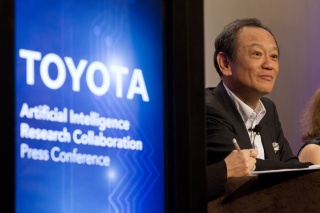
Toyota invests $US 50 million in artificial intelligence research
Kiyotaka Ise, Toyota’s Chief Officer of its Research and Development Group. The opportunities to improve every-day living through artificial intelligence supported technologies are boundless. Toyota will invest $US 50 million in the research and development of intelligent vehicle and mobility technologies with an ambitious new collaboration with the Massachusetts Institute […]
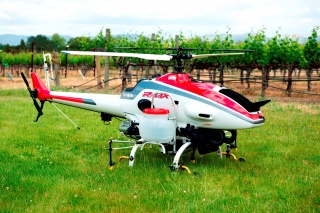
Unmanned helicopters to revolutionise agricultural industry
Yamaha Sky Division New Zealand represents the future of the agricultural industry. The introduction of the Yamaha RMAX unmanned helicopters will enable property owners, licensed operators and contractors to maintain the land and crops remotely, from the air, and without the hassles that come with more traditional farming methods. Weighing […]
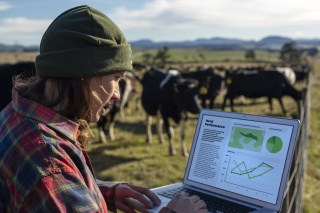
Business talent scouts looking for next superstar
Business talent scouts are looking for a startup with the potential to be New Zealand’s next global agritech superstar. Sprout, a national agritech business accelerator, is searching the country for eight budding entrepreneurs with embryonic agritech businesses for a new development programme. The chosen eight will receive a cash injection […]
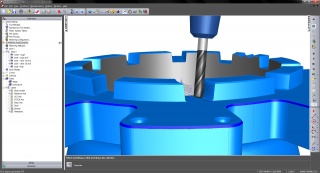
Delcam launches 2016 FeatureCAM with new high-efficiency roughing
Delcam has launched the 2016 release of its FeatureCAM feature-based CAM software. This includes a range of enhancements, in particular more options for the Vortex high-efficiency area-clearance strategy, support for bar-fed mills, more efficient turning and user-interface improvements to make programming even easier and faster. FeatureCAM was the world’s first […]
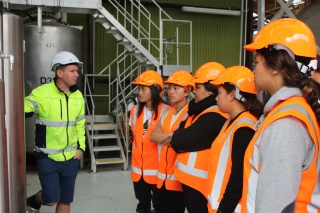
Got a Trade Week: connecting manufacturers with their future workforce
Opening their West Auckland plant to students to host a Competenz Discovery Tour during August’s national Got a Trade Week proved a good way for award-winning winemaker Matua Valley Wines to help young people learn about a career in their industry and connect with a potential future workforce. Matua winemaker […]
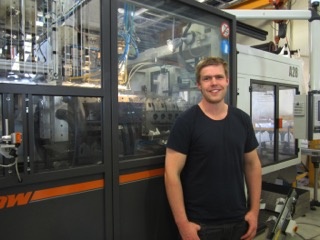
Bringing youth into industry
-Ben Connolly Industry for me started when I was 16 with a part time job in a plastics manufacturing plant. The company had some fascinating processes. I wasn’t allowed to do any of the ‘fun’ stuff though, my job was to sweep the driveway and process production waste. At 16 […]

Shop floor monitoring goes high tech
Individual operations on the shop floor of an industrial plant can be tracked using a sophisticated automated monitoring system that employs advanced mathematical techniques. To track work in progress, A*STAR scientists combined the popular radio-frequency identification (RFID) tags with rigorous computational processing of ‘discrete-event observers’. This system will enable managers […]

Nuance Power PDF not the traditional PDF solution
Nuance Power PDF offers the PDF software features that business users need to be productive at a price that supports deployment across the entire enterprise. Power PDF delivers high performance, an intuitive user experience, and value, freeing users from the compromises of traditional PDF applications. To see a demonstration of […]

OCR Drop Positive Move
Today’s drop in the Official Cash Rate (OCR) has been hailed as the right move in the current economic climate by the Employers and Manufacturers Association. The Reserve Bank reduced the OCR by 25 basis points to 2.75 percent. Chief Executive Officer, Kim Campbell, says the much anticipated drop was […]

What will really happen in the next decade
Earlier this year, the Chinese People’s Congress was told the growth target would be 7% but that “deep-seated problems in the country’s economy are becoming more obvious.” Since then, predicted growth rates have dropped considerably. McKinsey Institute authors Luis Enriquez, Sven Smit and Jonathan Ablett have produced four economic scenarios […]

Exports sales boosted in July
The latest New Zealand Manufacturers and Exporters Association (NZMEA) Survey of Business Conditions completed during August 2015, shows total sales in July 2015 increased 2.48% (year on year export sales increased by 4.70% with domestic sales decreasing 0.18%) on July 2014. The NZMEA survey sample this month covered NZ$511m in […]

EMA Welcomes LGNZ Mobilising the Regions Paper
The EMA has welcomed the release of the Mobilising the Regions paper, released by Local Government New Zealand today, saying it breathes life into key issues the Employers and Manufacturers Association has been advocating for on behalf of its members. LGNZ’s major transport study highlights the critical nature of transport […]

Building the Foundation: Preparing Your Manufacturing Business for AI Success
-Adam Sharman, CEO LMAC Group APAC The manufacturing sector stands at the precipice of an AI revolution that promises to transform everything from production efficiency to supply chain management. Yet for many business leaders, the question isn’t whether to adopt AI, but how to prepare their organisations to extract maximum value from these powerful technologies. The answer lies not in the sophistication of the AI itself, but in the quality of the foundation upon which it’s built. The Data Foundation Imperative Before any AI system can deliver meaningful insights, your manufacturing operation must first establish a robust data infrastructure. This begins with conducting a comprehensive audit of your existing data landscape. Map out where data is generated across your operation—from sensor readings on the factory floor to inventory management systems, quality control metrics, and customer order patterns. Many manufacturers discover they’re sitting on vast amounts of valuable data that remains siloed across different departments and systems. The key is achieving data integration and standardisation. Legacy systems often speak different languages, storing similar information in incompatible formats. A machine’s operational data might be recorded in one system while maintenance records exist in another, making it impossible for AI to identify patterns between equipment performance and maintenance needs. Investing in data integration platforms that can unify these disparate sources creates the coherent dataset that AI algorithms require to function effectively. Data quality represents another critical pillar. AI systems amplify the characteristics of the data they’re trained on—if your data contains errors, inconsistencies, or gaps, your AI will perpetuate and magnify these problems. Implement rigorous data validation processes, establish clear data governance protocols, and create systems for continuous data quality monitoring. This might involve automated checks for outliers, regular audits of data entry processes, and establishing clear accountability for data accuracy across teams. […]